
Container domes – Covered space is one of the most valuable things a logistics yard, transport depot or council works depot can have, and one of the hardest to add quickly. A new warehouse or shed means design, approvals, a slab and a builder, all of which take time and capital that many operators would rather spend elsewhere.
For sites on a lease, or those expecting their needs to change, a permanent building can also be a poor long-term bet.
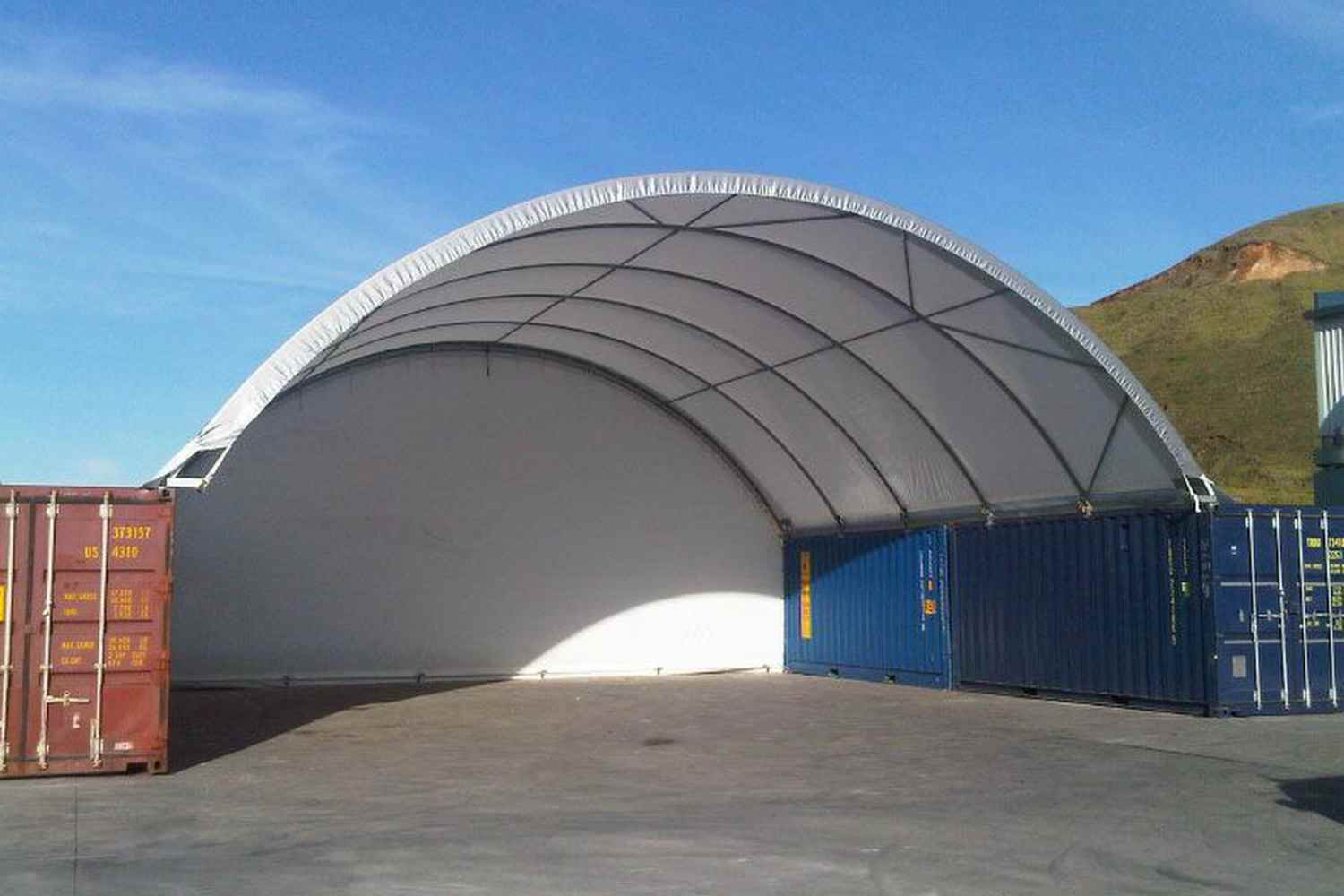
Container domes and shelters offer a different route. Two containers are placed in parallel and a steel-framed fabric roof is fixed across the top, creating a covered bay between them. It is a structure that many Australian operators have come to rely on, and it is worth understanding why, and how to specify one properly.
Where container domes fit in logistics and depots
The format works well anywhere that needs flexible undercover space without a long-term commitment. For a broader view of shelter options, see Allshelter. Common uses include:
- Cross-docking and staging. Freight can be sorted and held out of the weather before loading.
- Fleet maintenance. Light vehicle and truck servicing bays, tyre changing and washdown areas.
- Council depots. Covered storage for road materials, signage, plant and equipment.
- Seasonal overflow. Extra capacity during peak periods, which can be removed or relocated afterwards.
- Secure storage. The containers themselves lock, keeping high-value items safe while the covered area stays open for work.
Why operators on shorter leases favour them
The biggest advantage is flexibility. You can often install a dome shelter with ballast rather than concrete footings, depending on size and wind requirements, so you do not need to pour a slab on land you do not own. When the lease ends or you move operations, you can dismantle and reassemble the structure elsewhere.
Other practical benefits include:
- Standard sizes can be available quickly, and installation is measured in days rather than months.
- Natural light. Translucent fabric lets daylight through, reducing daytime lighting costs.
- Cooler working conditions. Fabric does not radiate heat inward the way steel cladding can, which makes a noticeable difference in an Australian summer.
- Many systems can be extended in length or joined together as needs grow.
Choosing the right configuration Container domes
Not every dome is built the same way, and the mounting style has a big effect on usable space.
Inside mounted or outside mounted
Some roofs sit on the inner edge of the containers, while others mount to the outer edge. The same pair of containers can produce quite different clear widths depending on the configuration, so compare usable width rather than overall footprint.
Height
Forklifts with raised masts, curtain-sider trucks and tipping trailers all need clearance. Measure the tallest vehicle or load that will ever go under the roof with everything raised, then add working room. Double-stacked containers or lift kits can add significant height where standard containers fall short.
Length and ends
Container domes can be built to suit 20 or 40 foot containers and are often available in custom lengths. Endwalls, roller doors and pedestrian doors can close in one or both ends to keep out dust and weather, which is useful for freight that must stay dry.
If you are comparing products, look for suppliers that clearly list usable dimensions and mounting options for their container dome shelters. Clear, published specifications make it much easier to match a structure to your equipment and workflow before you ask for a quote.
Compliance and approvals
Whether the state, the local council, how long the container dome will stay, and how it will be used determine if it needs approval. In some cases, authorities may treat it as a temporary structure; in others, it will require a building permit.The National Construction Code sets the performance requirements that buildings in Australia must meet, and your certifier or council will use it to determine what applies to your structure.
Before ordering, ask the supplier for:
- Engineering certification for your wind region and site conditions.
- Details on the hold-down method and whether footings are required.
- Information on fire performance of the fabric if the structure will be close to other buildings.
- Installation documentation, which may be needed for your approval application.
Having this information ready early avoids delays once the project is underway.
Understanding container domes price
Buyers often ask about cost first, but price depends heavily on a few variables:
- Wider and longer structures cost more, and double-stacked configurations add material.
- Wind rating. Higher wind regions require heavier engineering.
- Endwalls and accessories. Doors, endwalls and lighting add cost but can transform how the space is used.
- Some operators self-install; others prefer a professional crew.
- Freight to remote or regional sites adds to the total.
When comparing quotes, look beyond the headline figure. Check what the warranty covers, how long it lasts and whether it includes the frame, fabric and workmanship. A cheaper structure with limited coverage may cost more over its life.
Getting the layout right
A few simple planning decisions can make the structure far more useful:
- Traffic flow. Allow room for vehicles to enter, turn and exit safely.
- Align the open ends with prevailing winds where possible.
- Container use. Assign one container to tools and parts, and the other to storage or a site office.
- Plan where roof runoff will go to avoid pooling at entrances.
- Map out power and lighting before installation.
Final thoughts
For logistics operators and council depots, container domes offer a practical balance of speed, flexibility and cost. They create covered, usable space without the time and expense of a permanent building, and they can move when the business does. Specify for your site conditions, compare usable dimensions rather than footprints and sort out approvals early, and a container dome can become one of the most useful assets in the yard.