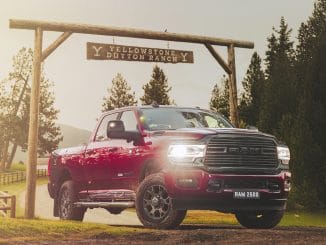
The Ram 1500 has become one of the fastest-growing nameplates in Australia, with DT-generation trucks regularly hitched to 2.5–3 tonne caravans.
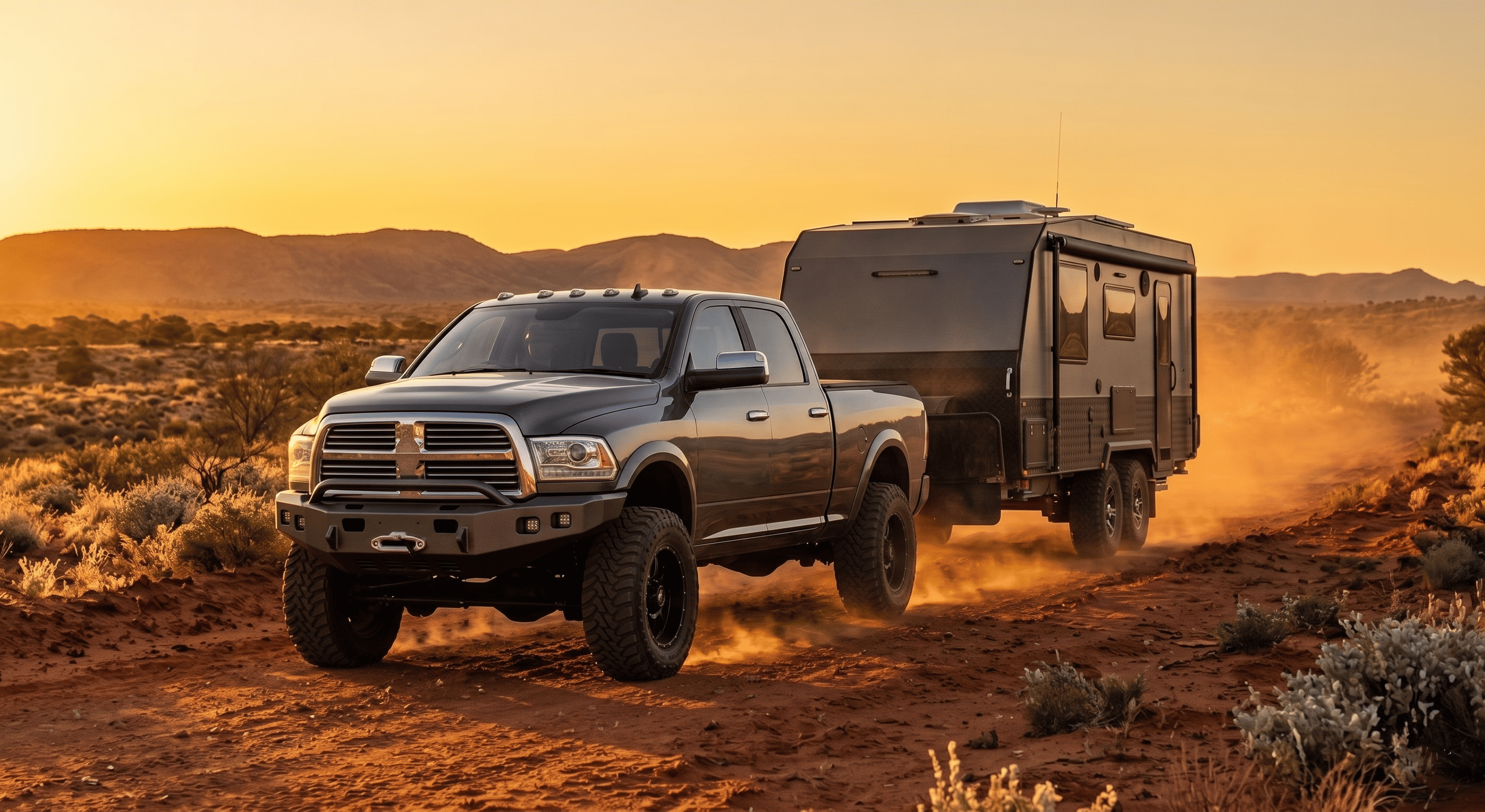
But one question keeps surfacing in every Ram owners’ group: is the 1500 enough, or should you have bought a 2500? The honest answer depends entirely on what you’re asking the truck to do.
The Ram 1500: What It Does Brilliantly
The DT-generation Ram 1500 is one of the best light-duty pickups in the world. The 5.7L HEMI V8 delivers around 291 kW and 556 Nm, pulls a 3,500 kg braked trailer confidently, and remains daily-drivable in city traffic. For most Australian buyers, it’s the sweet spot.
Key limits to know:
- Payload typically 600–900 kg depending on configuration
- Tow rating capped at 3,500 kg braked
- Ball weight (tongue weight) is often the real binding constraint
A loaded Laramie with passengers, a full fuel tank, gear, and a 300 kg ball weight can exhaust its payload budget before you’ve gone anywhere. That’s the limit most buyers underestimate.
The Ram 2500: A Different Vehicle Entirely
Stepping up to a 2500 isn’t an upgrade — it’s a platform change. The 2500 runs a fully boxed HD frame, solid front axle, leaf-sprung rear, and the defining feature: the 6.7L Cummins inline-six diesel producing 420 hp and 1,075 lb-ft of torque. The factory exhaust brake is the strongest in class.
Capability jumps significantly: payload climbs to 1,400 kg+, conventional tow rating reaches 4,500 kg on the official RHD truck, and the HD steering, brakes, and cooling don’t fade under sustained load. Owners committed to the platform tend to invest in genuine 6.7 Cummins performance parts to keep these trucks at peak performance over the long haul.
The Tow and Payload Math
A Ram 1500 Laramie with ~720 kg payload, loaded with driver, passenger, fuel, and a typical 300 kg ball weight from a 3,000 kg caravan, leaves under 5 kg of margin. A 4,000 kg gooseneck at 15% pin weight exceeds the 1500’s payload before a single passenger climbs in. The 2500 handles the same scenario with 600+ kg to spare.
Also worth checking: under standard car licences, GCM caps and GVM upgrade requirements apply when towing in the 4,500 kg+ bracket. Confirm with your state authority before buying.
Which One Is Right for You?
The Ram 1500 makes sense for: daily family use with occasional towing under 3,000 kg, 2.5–3 tonne sealed-road caravan touring, and tradies who want American presence without HD running costs.
The Ram 2500/3500 makes sense for: 3.5+ tonne vans on grades and corrugated roads, gooseneck horse floats and stock trailers, long-distance highway work, and owners planning to keep the truck 10+ years.
Simple rule: regularly tow over 3,000 kg and you’ll appreciate the 2500. Regularly over 3,500 kg and you need it.
The Cost Reality
Budget roughly 30–40% more at purchase. Insurance, rego, tyres, and servicing are all higher. The 2500’s aftermarket lives almost entirely in the United States. Which is why most serious owners build a relationship with a US specialist early. EngineGo ships Ram HD delete kit options and diesel tuner upgrades to Australia regularly. With engine-year-specific fitment for trucks from 2007.5 onward. The flip side: cost per kilometre when towing heavy actually favours the 2500. The Cummins was built for this work and punishes consumables less than a 1500 worked near its ceiling.
The Ram 1500 is the right truck for most Australian buyers. But there is a clear ceiling, and once you’re near it, the 2500 isn’t a luxury. It’s the truck the job requires. If you’re hovering around that line, lean toward the 2500. Almost every owner who steps up regrets not doing it sooner.